OpenOCD “unable to open ftdi device with vid 0403, pid 6010”: fix on Windows 11 (FT2232H + Zadig on Interface 0)
OpenOCD’s ftdi driver does not use FTDI’s Windows driver at all: it talks to the chip through libusb, so the channel it drives must…
Programmer software, drivers and bench guides — clean direct downloads.
OpenOCD’s ftdi driver does not use FTDI’s Windows driver at all: it talks to the chip through libusb, so the channel it drives must…
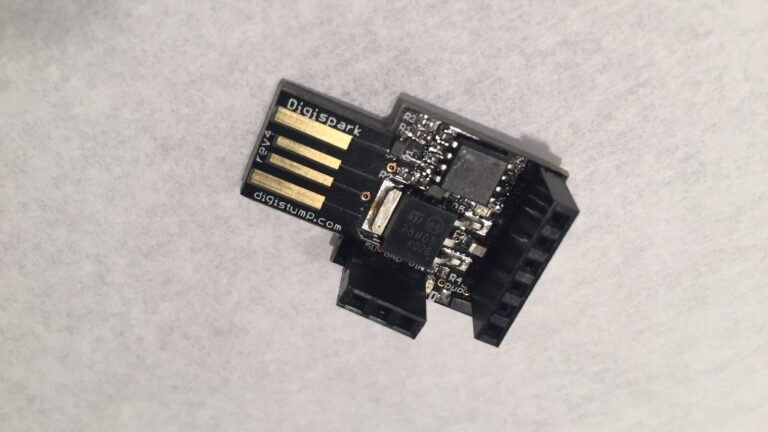
A Digispark has no USB chip: micronucleus shows up as 16D0:0753 for about 6 seconds, then your sketch runs. What Windows 11 shows in each phase, the libusb driver via Zadig preset, the micronucleus 2.6 uploader mirrored with SHA-256, and the USB 3 port fix.
Windows 10 and 11 bind their own usbser.sys to any USB device that reports class 02h/02h, so Pico, Leonardo, SAMD, TinyUSB, STM32 CDC and ESP32-S3 boards need no download. CH340, CP2102, FT232R and PL2303 are vendor-specific and land in Other devices with Code 28. The class codes from each board's firmware source, and how to check yours.
Windows 11 has no driver for USBTMC (class FEh), so Rigol and Siglent scopes land in "Other devices" until ausbtmc.sys arrives with a VISA. What Rigol's Ultra Sigma zip really installs (NI-VISA 5.4.1 from 2014), the VID:PID of each scope, and why Owon needs its own libusb driver.
"The port is busy or doesn't exist" hides three Windows error numbers: 5 (another program owns the port), 2 (no such COM number) and 433 (the USB device vanished). How to read them, the two-minute Process Explorer search that names the process, and the programs that grab serial ports in the background.
"No ST-LINK detected" is a USB or driver problem; "No STM32 target found" is wiring, power or the chip itself. The two messages sorted into four layers, with the exact message table, the UM2237 connection modes, and the ST Community threads that settled each case.
A CH347 is two or more USB devices, not one. The mode table (55DA to 55DE) with the Windows driver per interface, AsProgrammer dregmod v5 mirrored with its checksum, flashrom and OpenOCD support dates, the chip-revision JTAG problems, and the five failures in order.
What claims a CH9102 or CH343 on each macOS and Linux version, the Linux 6.8 to 6.19 BREAK gap on the CH343 and the kernels that close it, brltty 6.7 and ModemManager, WCH's ch343 driver mirrored with its checksum, and the macOS usbmodem vs wchusbserial upload failure.
What binds an FT232R on each macOS and Linux version, the first kernel that knew each FTDI chip, FTDI's 1.6.0 dext with verified checksums of the archived packages, and the fix for each failure.
Decode the ESP8266 74880-baud boot line bit by bit, see which boards auto-reset into download mode, and the Linux kernel versions that broke CH340 uploads.