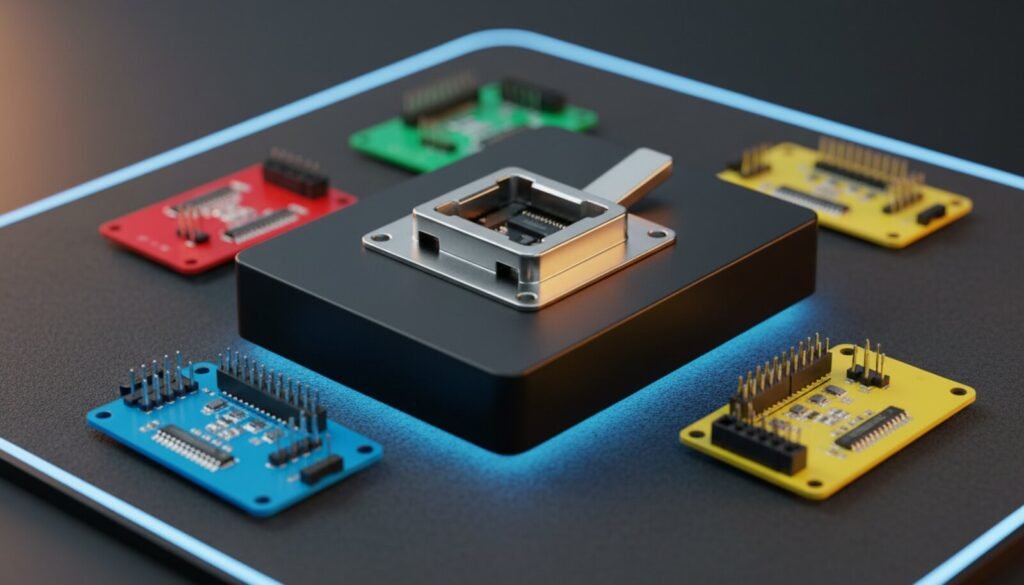
The XGecu T48 (also sold as TL866-3G) is the direct successor to the legendary TL866II Plus — same philosophy, same software, but a faster engine and a much longer chip list. If you’re choosing between the two in the box-fresh aisle, this guide settles it.
What actually changed vs the TL866II Plus
| Chip support | ~34,000+ devices (roughly double the TL866II list), added regularly via software updates; |
| Speed | Substantially faster SPI clock — a 16 MB BIOS chip that crawls on the TL866II reads in a fraction of the time; |
| Voltage range | Wider VCC/VPP options, better support for modern low-voltage parts (1.8 V without drama); |
| NAND / eMMC | Still no. That remains T56 territory; |
| Software | Same XGpro — needs v12 or newer (v13 recommended). |
Setup
- Install XGpro v13 — older versions won’t detect the T48 at all (the classic “programmer not found” complaint from CD-installers);
- Connect via the USB-C port; XGpro’s status bar reads “T48” when live;
- Adapters from the TL866II era mostly carry over — same 40-pin ZIF pinout philosophy. The 1.8 V adapter is no longer needed for most low-voltage SPI parts.
The read/write workflow is identical to the TL866II Plus — chip selection, read, save the original dump, program, verify. The TL866II guide walks it step by step and everything applies here.
Common questions
“Programmer not found” on first connect? You’re on old XGpro. Install the current version, replug, done. This single issue accounts for most negative T48 reviews.
Is the T48 worth it over a used TL866II? Buying new: yes — the price gap is small and the chip list/speed gap is not. Already own a TL866II that covers your work: keep it, put the money toward a hot air station instead.
T48 or T56? One question decides: do you need NAND or eMMC (TV boards, dashcams, tablets, game consoles)? Yes → T56. No → T48 and pocket the difference.
Verdict
The T48 is what a sequel should be: everything the original did, faster, with a bigger library, at nearly the same price. It’s our default recommendation for a first “serious” programmer in 2026 — with the CH341A as the budget alternative and the T56 as the specialist tool.